
The Stylish Champion
How Lewis Hamilton Wins Each Day Through Creative Determination

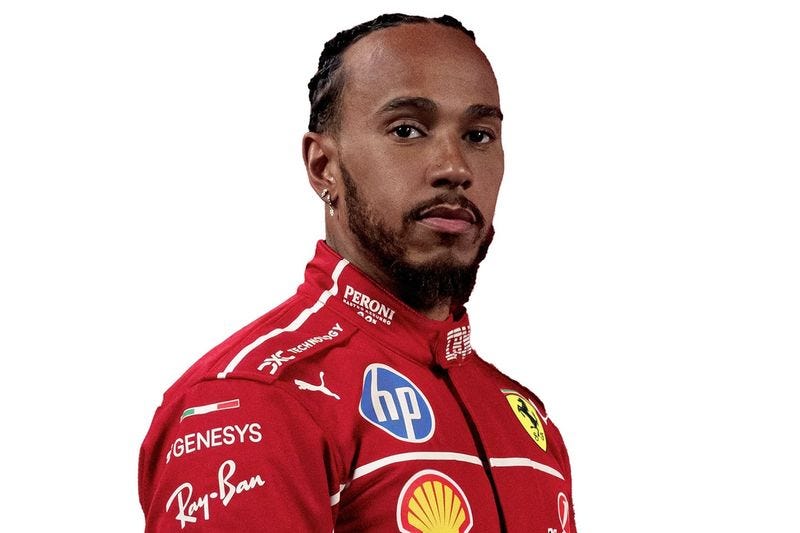
Lewis Hamilton made his F1 debut for McLaren. Nine seasons after that, he’d won his first championship. Today, he has seven World Championships, which is tied for the most in F1 history. 105 race wins. The most ever. 104 pole positions. The most ever. What makes Hamilton’s story transcendent is that he used his platform to change Formula 1 itself. This is the story of how Lewis Hamilton won every day through raw speed, mental toughness and sheer determination to become one of the greatest race car drivers of all time.
The McLaren Promise
At the 1995 Autosport Awards, 10-year-old Lewis approached Ron Dennis. McLaren was F1’s most successful team with legendary drivers like Ayrton Senna and Alain Prost. Dennis was F1 royalty. Dennis must have seen something. The confidence bordering on delusion or certainty beyond his years. Three years later, McLaren signed Lewis to their young driver program. He was 13 years old with a contract to F1’s biggest team.
The signing changed everything. McLaren funded his racing career and his father could finally breathe a sigh of relief financially. The three jobs ended. Sleeping in the van sleeping stopped. But the pressure intensified. Lewis was representing McLaren’s investment. Every race was an evaluation. Every mistake was scrutinized. The path to F1 required perfection.
Lewis delivered. He won championships in Formula Renault, Formula 3 and GP2, which was F1’s feeder series. He began to dominate. The progression was flawless. Win the day by making bold promises, then doing the work to fulfill them. Lewis’s confidence at 10 looked crazy until he proved it was just accurate prediction.
The Mercedes Gamble
After six seasons at McLaren, Lewis faced a decision in 2012. Stay with the team that developed him or join Mercedes, a team that hadn’t won a championship in over 50 years. McLaren was safe. Established. Competitive. Mercedes was a risk at the time. A massive initial investment but no results yet. Everyone said stay at McLaren. Switching to Mercedes was crazy. Lewis saw something others missed: Mercedes was building something special. Massive resources. Top engineers. Radical new car concept. They weren’t winning yet but they would be eventually.
In 2013, Lewis joined Mercedes. The first season was mediocre. Critics said he’d made a terrible decision. He’d left a competitive team for a mediocre one. Then 2014 arrived. New engine regulations. Mercedes had built the perfect power unit. Lewis won 11 races and his second championship. The gamble had paid off spectacularly.
From 2014-2020, Mercedes dominated F1 like no team in history. Lewis won six championships in seven years. The team won eight consecutive constructor’s championships. The gamble had become a dynasty. Win the day by seeing opportunities others call risks. Lewis left security for potential. The potential became unprecedented success.
The Unprecedented Records
By 2020, Lewis had matched Michael Schumacher’s seven World Championships, which were the most in F1 history. He’d surpassed Schumacher’s 91 race wins, eventually reaching 105 wins, the most ever. The records are absurd: 104 pole positions. 197 podium finishes. Multiple seasons with 10+ wins. Sustained excellence across 17 seasons.
The records don’t even capture his total impact. Lewis changed what was possible for drivers at the time. He became a driver, activist, fashion icon, business investor. He expanded what an F1 driver could be beyond the track.
His longevity is unprecedented. Still competing at the highest level at 40 years old. Still fast. Still winning. In a sport where careers typically end by 35, Lewis keeps performing. Win the day by redefining what’s possible in your field.