
The Adventurous Author
How Ernest Hemingway Won Each Day Through Bold Action

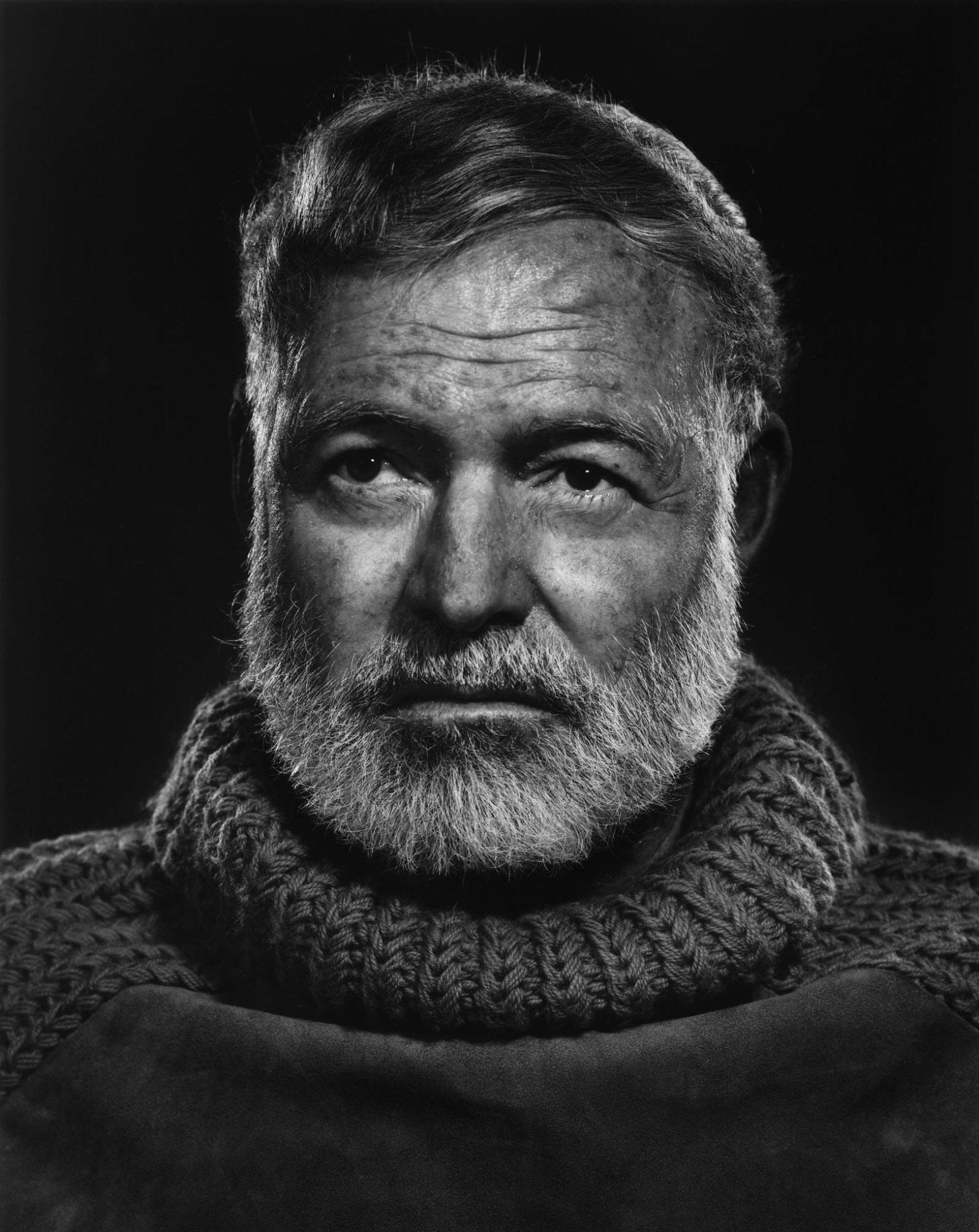
Ernest Hemingway woke up at dawn every day and wrote standing at his desk. Five hundred words. Every morning. No exceptions. Whether in Paris, Cuba, Key West or Africa, the routine never changed. He didn’t wait for inspiration. He didn’t write when he “felt like it.” He wrote when the sun came up, for as long as it took to produce five hundred good words. Then he stopped, even if ideas were flowing, to preserve energy for the next day. That discipline produced some of the most influential writing in American literature: “The Sun Also Rises,” “A Farewell to Arms,” “For Whom the Bell Tolls,” “The Old Man and the Sea.” Novels that defined modern prose. A Nobel Prize. Work that’s still studied a century later. Hemingway lived a legendary life. Ambulance driver in World War I. War correspondent in three wars. Big-game hunter in Africa. Deep-sea fisherman in Cuba. He survived plane crashes, gunshot wounds, car accidents and explosions. He boxed, hunted, fished, drank and fought his way through life.
The Oak Park Rebel
Oak Park, Illinois, 1899. Ernest Miller Hemingway was born into an upper-middle-class family. His father was a doctor. His mother was a musician. They valued education, culture and conventional success. Young Ernest loved the outdoors, especially hunting and fishing with his father in Michigan. His mother wanted him to be cultured, forcing him to play cello and join the high school orchestra. He resented the forced refinement, preferring masculine pursuits over artistic ones.
At Oak Park High School, Hemingway wrote for the student newspaper. His early writing was conventional, nothing suggesting future genius. He was developing the habit: write regularly, regardless of inspiration. After graduation, Hemingway’s parents wanted him to attend college. He refused. He got a job as a reporter at the Kansas City Star, learning journalism’s economy of language. The Star’s style guide demanded short sentences, vigorous language, elimination of unnecessary words.That journalism training became Hemingway’s prose foundation: write tight, cut excess, make every word count. The discipline of daily newspaper deadlines taught him that waiting for inspiration was luxury. Real writers write on schedule. Win the day by building the writing habit before quality emerges. Hemingway’s high school and journalism work was unremarkable but the daily discipline was forming.
The Paris Apprenticeship
After the war, Hemingway married Hadley Richardson and moved to Paris in 1921 as a foreign correspondent. Paris in the 1920s was the center of artistic innovation: cheap living, vibrant culture, revolutionary art movements. Hemingway met everyone: Gertrude Stein, Ezra Pound, F. Scott Fitzgerald, James Joyce. These experiences became his literary education. Stein became his mentor, teaching him to cut unnecessary words. Pound taught him imagist precision. The real education was discipline. While other expatriate writers spent days at cafés talking about writing, Hemingway wrote every morning. Five hundred words minimum. Standing at his desk in a cold apartment. No heat, no comfort, just work.
He’d write in the morning, then spend afternoons at cafés revising and socializing. The routine was sacred: create in the morning when fresh, refine in the afternoon, socialize in the evening. Separate the processes, respect each phase. His first book, “In Our Time” (1925), showed the stripped-down style he was developing: short sentences, concrete images, emotional restraint. Critics noticed something new: prose that felt modern, urgent, different from Victorian ornamentalism.
“The Sun Also Rises” (1926) made Hemingway famous at 27. The novel captured the Lost Generation: disillusioned young people after WWI, drowning in alcohol and meaninglessness. The book was partially autobiography: Hemingway and his friends, thinly disguised, living aimlessly in Paris and Spain. Win the day by maintaining discipline even when surrounded by bohemian chaos. Hemingway wrote every morning while Paris slept off hangovers.
The Cuban Exile
In 1939, Hemingway moved to Finca Vigía, a house outside Havana, Cuba. He’d live there for 20 years, writing some of his most important work while fishing, drinking and slowly falling apart. The routine continued: write every morning, fish every afternoon, drink every evening. But the drinking was increasing. The depression was deepening. The personal life was chaotic: four marriages, each ending badly.
“The Old Man and the Sea” (1952) was his comeback. The novella, about an aging Cuban fisherman battling a giant marlin, was deceptively simple. Critics recognized the brilliance. The book won the Pulitzer Prize in 1953. In 1954, Hemingway won the Nobel Prize in Literature. He’d achieved everything a writer could achieve. Win the day by maintaining routine during success and failure. Hemingway’s morning writing discipline persisted through decades of ups and downs.
The Prose Revolution
Hemingway’s influence on writing is immeasurable. Before him, prose was ornate: long sentences, flowery descriptions, Victorian excess. After him, modern prose was lean, direct, efficient. His influence extends beyond literature into journalism, screenwriting, any writing that values clarity over decoration. The ideal of saying more with less, of trusting readers to feel what’s unwritten became Hemingway’s legacy. Writers still study his work, trying to understand how such simple prose creates such deep emotional pull.